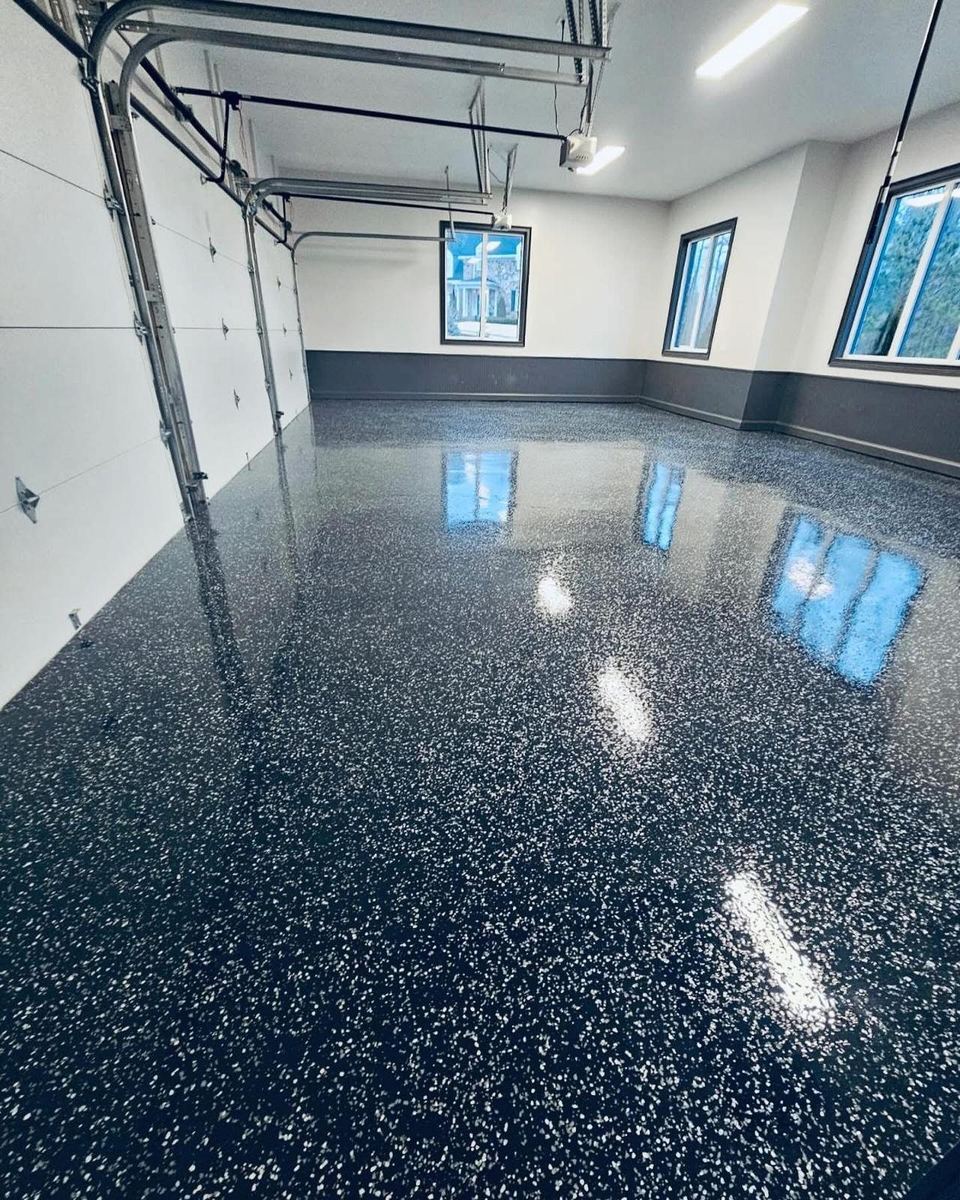
The two in plain words
- Epoxy. A two-part resin that goes on thick and hardens slowly, usually overnight. It bonds well to concrete and fills small flaws. Its weakness is sunlight, which turns many epoxies amber, and heat from tires on thin coats.
- Polyaspartic. A newer, fast-setting coating. It stays clear in the sun, resists scratches and hot tires, and hardens in a few hours. Its weakness is speed: it sets so fast that it is hard to apply without a trained crew.
| Epoxy | Polyaspartic | |
|---|---|---|
| Sunlight | Many turn yellow over time | Stays clear |
| Hot tires | Thin coats can soften | Made to handle them |
| Cure time | Overnight or longer | A few hours |
| Thickness | Builds thick, fills flaws | Goes on thinner |
| Working time | Long: can be shaped by hand | Short: needs a fast crew |
| Best use | Base coats, metallic floors | Flake floors, clear topcoats |
What we use, and why
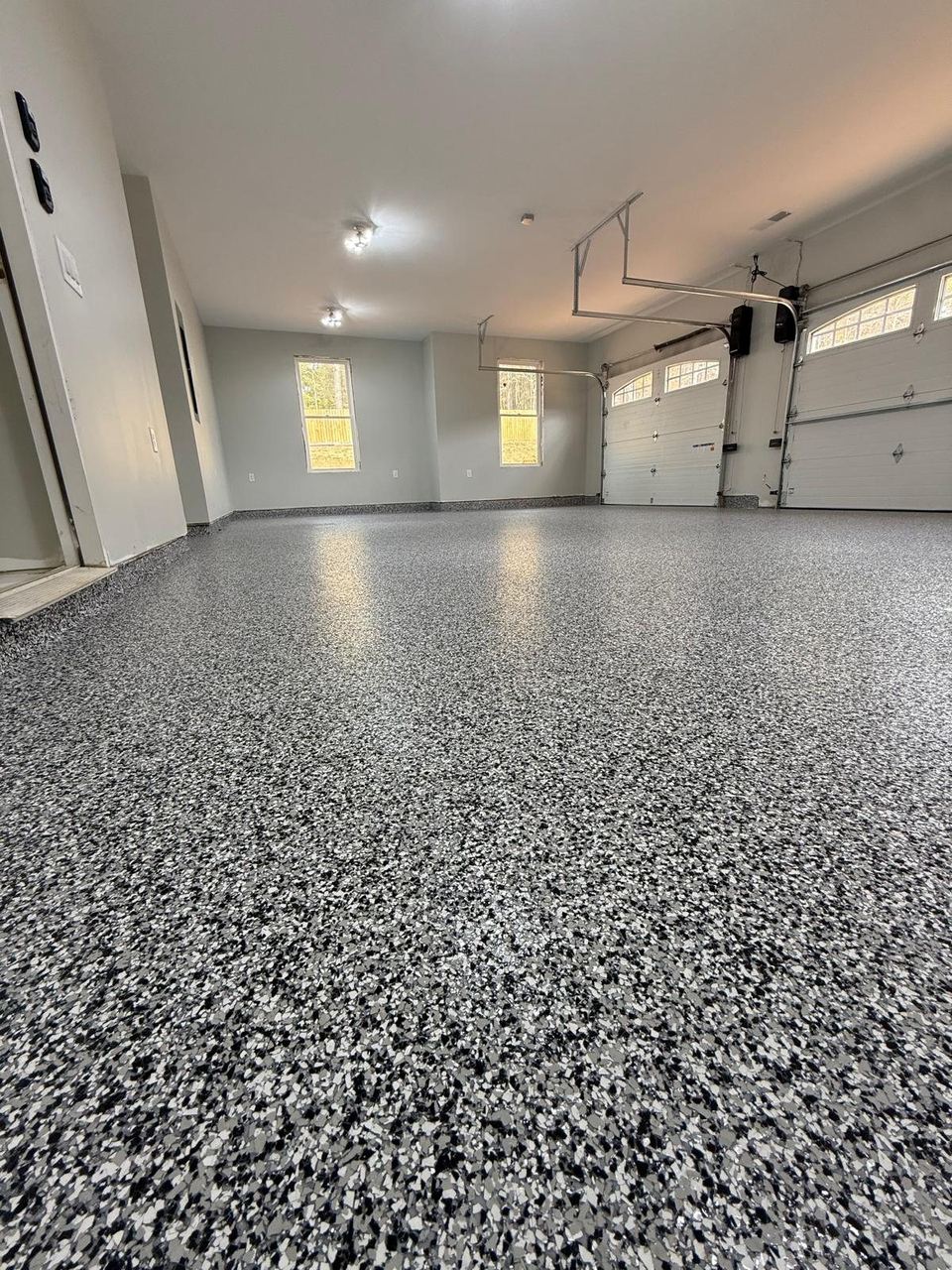
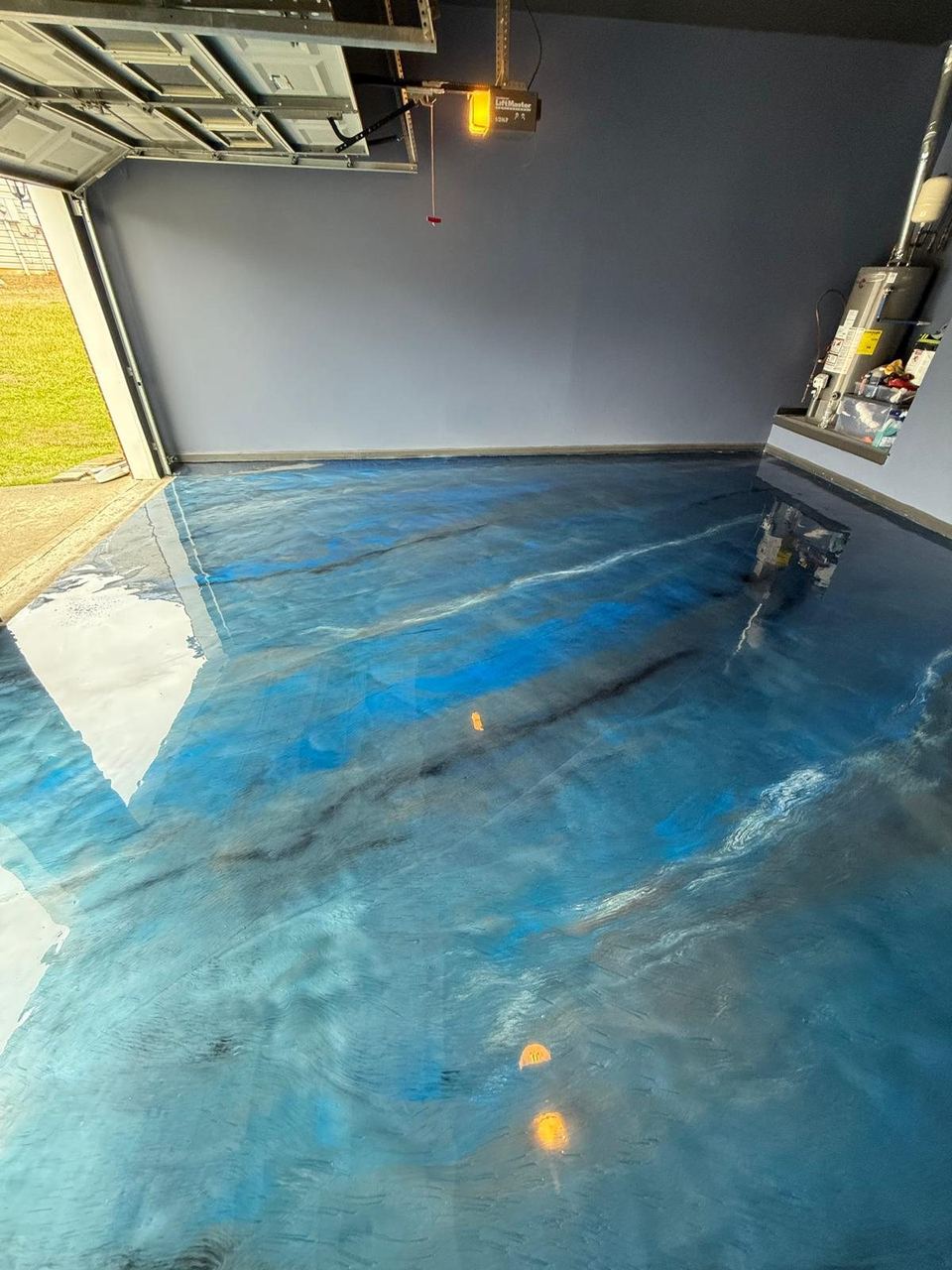
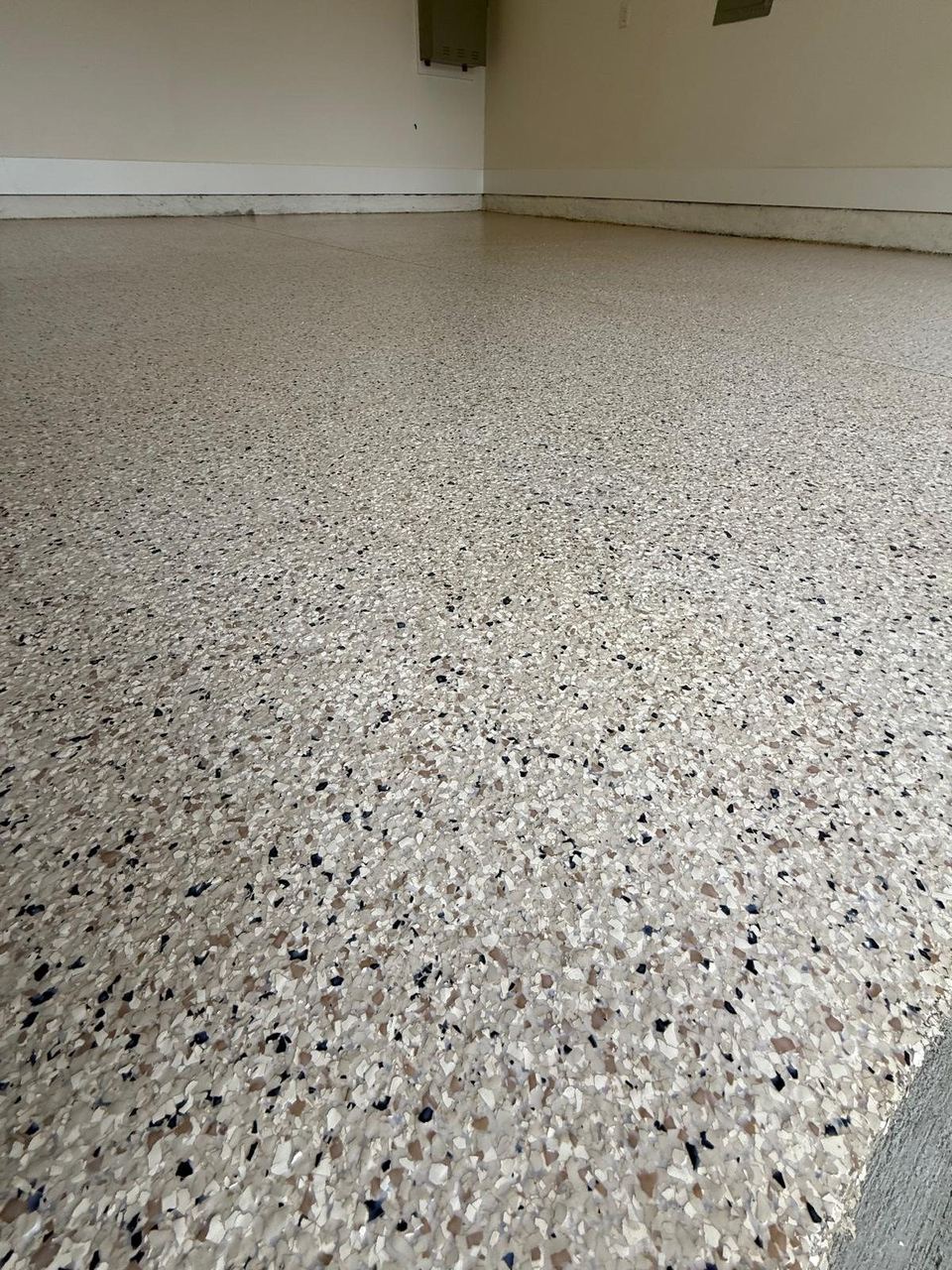
Our flake and solid-color floors are polyaspartic systems with a clear UV-stable topcoat. That is what makes a one-day install possible and what keeps the floor from yellowing by the garage door. Our metallic floors are epoxy with a clear urethane topcoat, because the marbled look only happens when the material stays liquid long enough to be moved by hand.
What about polyurea?
Polyaspartic is a type of polyurea. When an ad says "polyurea, not epoxy", it is usually describing the same family of fast-curing coatings. The name matters less than three things: was the concrete ground, how thick is the floor, and what is the topcoat.
Does one cost more?
Polyaspartic material costs more per gallon, but it saves a day of labor, so installed prices end up close. Our flake floors are $5.20 to $6.80 per square foot and metallic floors $6.40 to $9.60. The difference is the hand work in a metallic floor, not the chemistry.
Common questions
Is polyaspartic better than epoxy for a garage?
For the top layer, yes: it stays clear in sunlight, resists hot tires and cures in hours. Epoxy still does some jobs better, such as thick base coats and metallic floors that need a long working time.
Does epoxy turn yellow?
Many epoxies amber with UV exposure, most visibly near the garage door. A UV-stable clear topcoat over the floor prevents it.
Can I apply polyaspartic myself?
It is sold in kits, but it sets very fast, often within minutes of mixing. Most problems with do-it-yourself polyaspartic come from running out of working time.
How soon can I park on each?
On our polyaspartic flake and solid floors, walk after 24 hours and park after 48. Metallic epoxy floors cure slower: park after 72 hours.
Ask your own question
No account, no sign-up. Ask anything about your floor and Epoxy Living answers it here, in plain words.
No questions here yet. Yours can be the first.
Keep reading
Prices on this page come from the same table the calculator uses. Last reviewed 2026-09-20. Photos are real floors finished by Epoxy Living and its installation crew.